The Sega Saturn: The Rise of a Powerful 32-bit Star
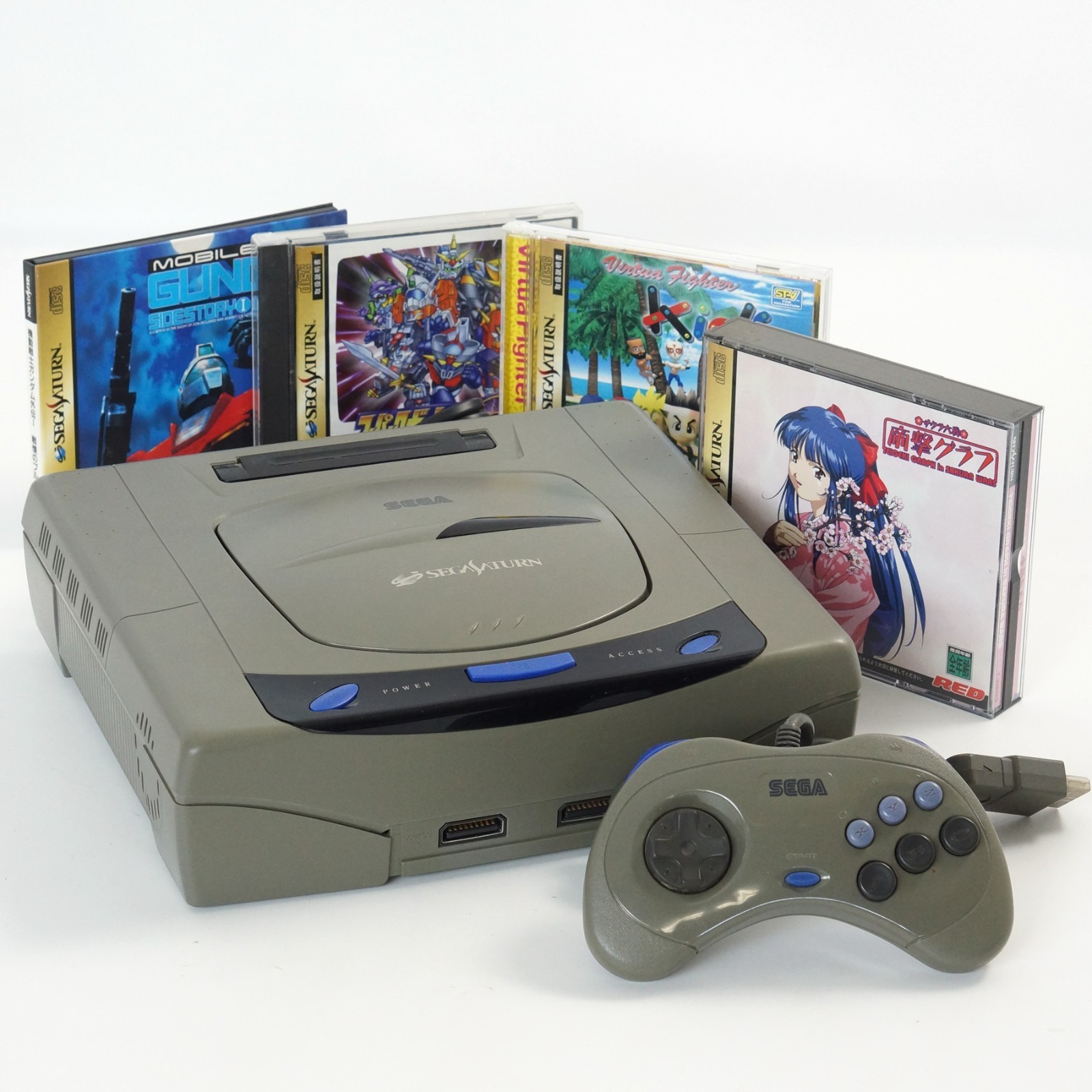
Sega Saturn
System Overview
Generation: A 32-bit disc-based successor to the Mega Drive, utilizing CD-ROMs as its primary media.
Expansion: Features a cartridge slot used for extra save memory or RAM cartridges (to speed up loading and improve performance), rather than games.
Hardware Architecture
Complex Multi-Processor Design: Built like a Sega arcade machine, it uses a difficult "parallel processing" setup.
CPUs: Dual Hitachi SH-2 processors.
Additional Power: Includes a "geometry engine" with three DSP math processors for 3D calculations.
The Dual Video Display Processors (VDP):
VDP1: Handles 3D objects and sprites using quadrilateral (four-sided) polygons, which featured advanced effects like anti-aliasing and texture mapping.
VDP2: A specialized chip for backgrounds. It could render massive, highly detailed 3D "infinite planes" (like floors and skies) with transparency and fog—tasks that were extremely demanding for other systems at the time.
Controls
Standard Pad: An evolution of the 6-button Mega Drive controller, adding two shoulder buttons (9 buttons total).
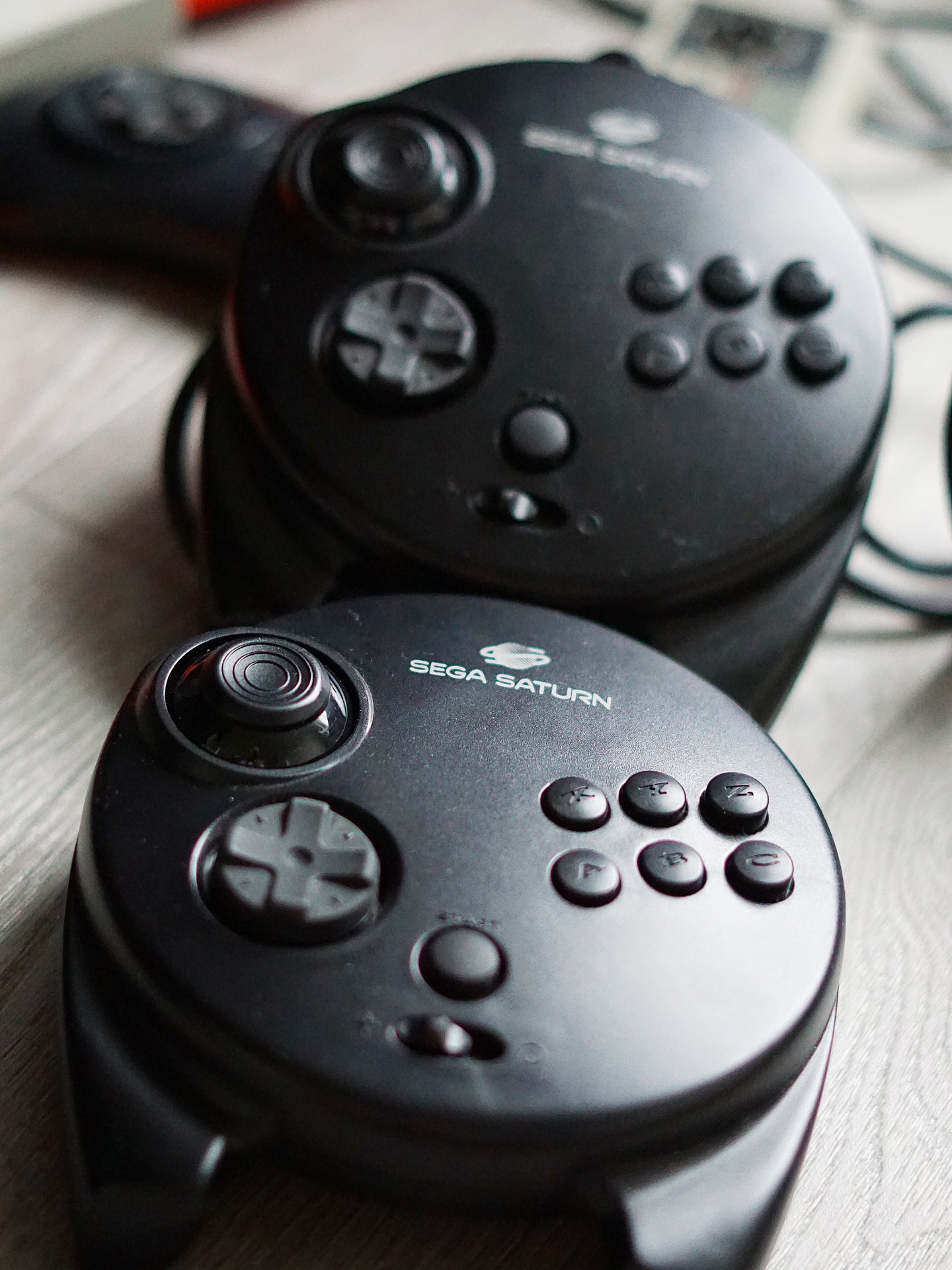
3D Control Pad: Introduced an analog stick and analog triggers, a design that influenced later consoles like the Dreamcast, Xbox, and GameCube.
The "Complexity" Issue
Development Difficulties: Because of its multiple chips, the Saturn was notoriously hard to program for.
Language Barrier: To reach the console's full power, developers had to use complex Assembly language. Most third-party developers used C language, which was easier but only tapped into a small fraction of the hardware's potential.
Industry Standards: While powerful, the Saturn's use of "quad" polygons and specialized background chips was different from the "triangle" polygon standard adopted by competitors, making cross-platform development difficult.
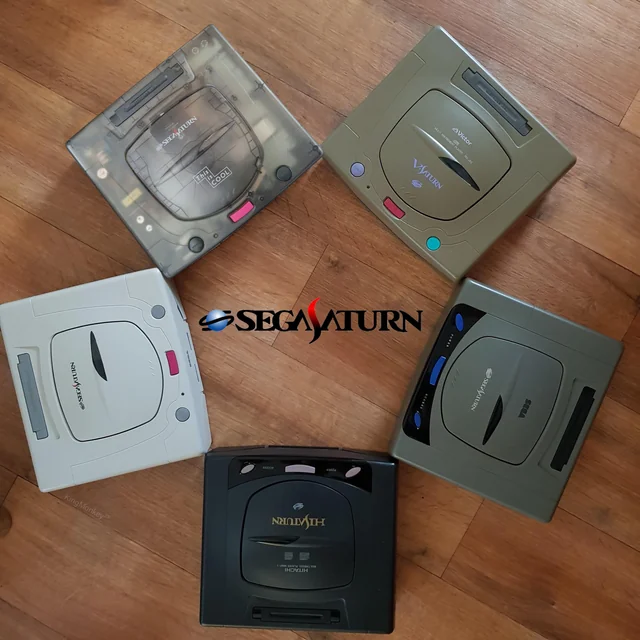
What's your fave Saturn flavour?
Models
While many models and colors exist, the core hardware remained consistent across all versions and regions. Compatibility for games is the same regardless of which model you own.
Major Revisions
Model 1 (Early 1994–1996):
Japan: Known as the "Grey Saturn." It features oval blue buttons and two LED lights (Power and Access).
Overseas: Identical design but made with black plastic.
Model 2 (1996 onwards):
Japan: Known as the "White Saturn." It features round buttons and removed the "Access" LED to reduce costs.
Overseas: Remained black but updated to the round button design.
Special Editions: Included semi-transparent "This Is Cool" units (only 30,000 made).
Third-Party Variants
Sega licensed the hardware to other companies, resulting in two notable variations:
V-Saturn: Produced by JVC (Victor).
HiSaturn: Produced by Hitachi.
The Difference: These have unique startup screens and aesthetics but play the same games as standard Sega units. Some, like the Game & Car Navi HiSaturn, included extra features like GPS.
Summary
The Sega Saturn was a pivotal but costly turning point for Sega. While it cemented the company's legacy as an arcade pioneer and became their most successful console in Japan, its complex hardware and high price caused it to fail in Western markets.
Ultimately, the Saturn served as an "expensive lesson" in the dangers of over-engineering. The difficulties developers faced and the financial losses Sega incurred during this era directly led to the company’s eventual exit from the hardware business just a few years later.